 GLOBEWICK
How to Do SEO for Your Website: Step-by-Step Guide
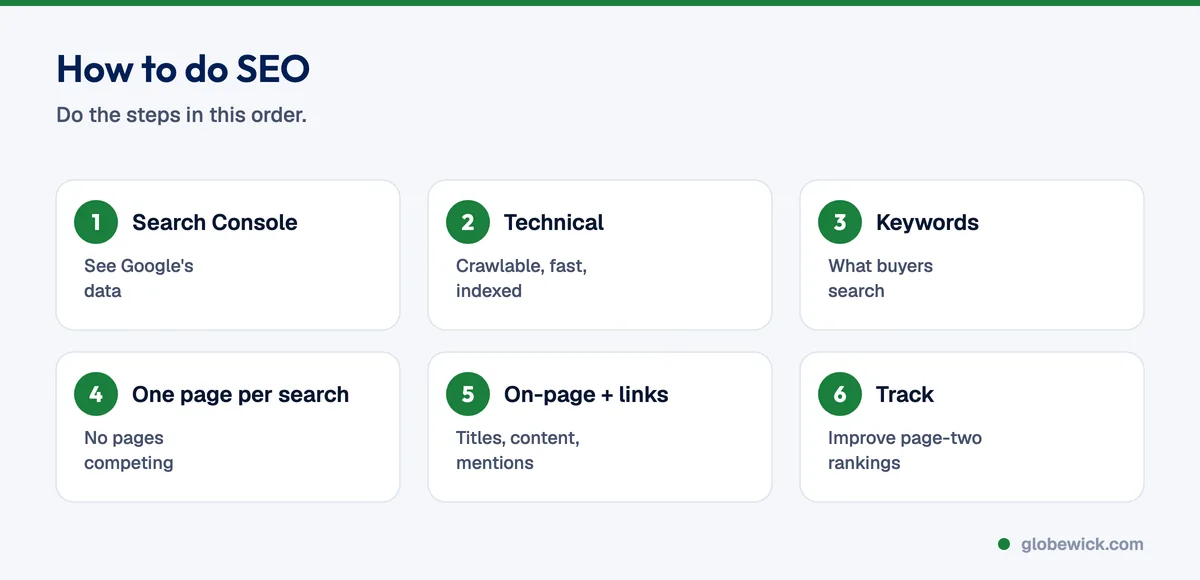
To do SEO for your website, make sure Google can crawl and index it, find the searches your customers use, create one strong page for each search, optimise each page's title, headings and content, make the site fast and mobile-friendly, earn links and mentions from other sites, and track results in Google Search Console. That is the whole job. This step-by-step guide shows how to do each part yourself, in order, and what to expect.
Google Ads Keyword Planner showed 1,000 to 10,000 searches a month for "how to do seo" in the United States and 100 to 1,000 in India and Australia in November 2026, along with hundreds of variations such as "how to do SEO for my website" and "how does SEO work".
How SEO works in one paragraph
Google discovers pages by following links and reading sitemaps (crawling), stores the useful ones (indexing), and orders them for each search (ranking) by relevance, quality and trust. SEO is making your site easy to crawl, clearly relevant to the searches you want, and trusted enough to rank. For the basics, read what SEO is.
Step 1: Set up Google Search Console and Analytics
Verify your site in Google Search Console, submit your sitemap and install GA4. Search Console shows which searches you appear for, your clicks and position, and any indexing problems.
Step 2: Fix the technical basics
- Pages return a 200 status and are not blocked by robots.txt or noindex tags.
- One version of the site (https, with or without www) and correct canonical tags.
- Fast loading and good Core Web Vitals on mobile.
- A clean XML sitemap and a logical URL structure.
- Structured data (schema) where it helps, such as Organization, Product, FAQ or LocalBusiness.
Our checklist: technical SEO basics that still get overlooked.
Step 3: Do keyword research
Find what your customers search at each stage, how often, and how hard it is to rank. Use Google Keyword Planner, Search Console and Google's own suggestions, then an SEO tool for competitor data. Follow our keyword research guide and pick from the best SEO tools.
Step 4: Map one page to each search
Group keywords that mean the same thing and give each group one page. Service and product searches belong on service and product pages. Questions belong in guides. Two pages targeting the same search compete with each other, so merge or redirect duplicates.
Step 5: Optimise each page (on-page SEO)
- Title tag: the main keyword near the start, under about 60 characters, written to earn the click.
- Meta description: a clear summary that makes people want to click.
- One H1 and clear H2 sections that cover what searchers want to know.
- Answer first: give the direct answer early, then the detail.
- Images with descriptive file names and alt text, compressed for speed.
- Internal links to and from related pages. See why internal linking matters.
Use our on-page SEO checklist for each new page.
Step 6: Earn links and mentions (off-page SEO)
- Get listed in relevant business directories and industry associations.
- Create useful resources, data and tools that others want to cite.
- Do digital PR: share expert comments and stories with journalists and bloggers.
- Build partnerships with suppliers, clients and communities.
- For local businesses, keep a strong Google Business Profile and earn reviews.
Check who links to you with our guide on how to check backlinks. Avoid buying links in bulk: it can get your site penalised.
Step 7: Track and improve
Every month, check clicks, impressions and positions in Search Console, plus leads or sales from organic traffic in GA4. Update pages that sit on page two, refresh content that is slipping, and add pages for new searches you discover.
How long does SEO take?
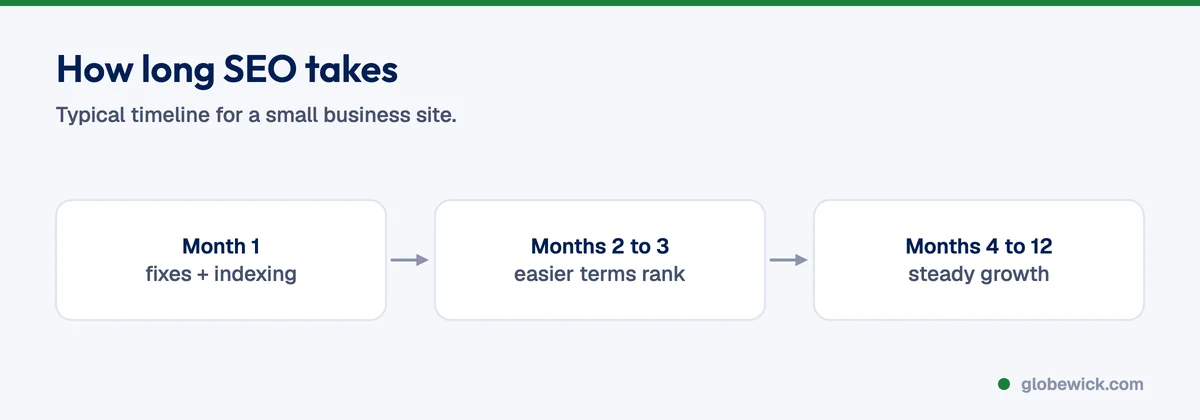
Technical fixes can show results within weeks. New pages for low-competition searches can rank in one to three months. Competitive terms usually take four to twelve months, depending on your site's authority and the competition.
Can you do SEO yourself?
Yes, especially for a small site. It takes consistent time each week. Many businesses start themselves and bring in help when they need more content, technical work or link building. See what SEO services cost in India or our SEO services. For online stores, read the Shopify SEO checklist.
FAQ
What is the first thing to do in SEO?
Set up Google Search Console, check that your pages are indexed, and fix anything blocking Google. Then do keyword research.
Is SEO free?
Organic traffic is free per click, but SEO takes time, content and sometimes tools or expert help.
How do I improve my SEO quickly?
Improve titles and descriptions on pages that already rank on page two, fix technical errors, and add internal links to your most important pages.