 GLOBEWICK
What Is PPC? Pay-Per-Click Advertising Explained
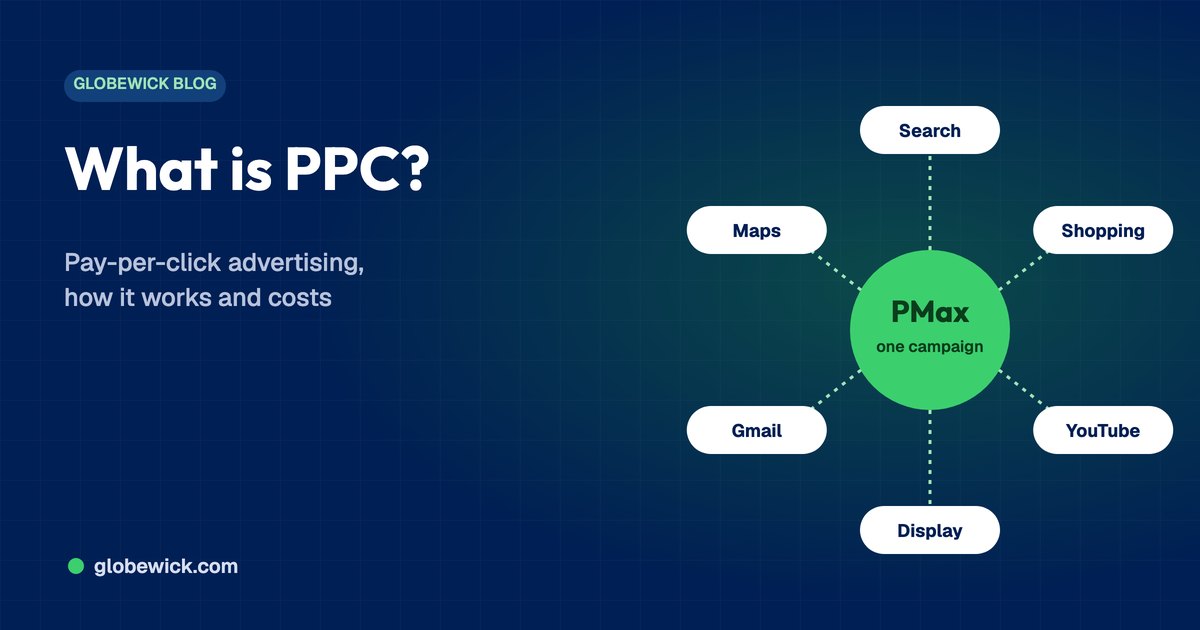
PPC (pay per click) is online advertising where you pay each time someone clicks your ad, rather than paying for the ad to be shown. The best-known PPC platform is Google Ads, where you bid on the keywords people search. Microsoft Advertising (Bing), Amazon Ads and shopping ads work the same way. Social platforms such as Meta, LinkedIn and TikTok also offer cost-per-click buying. PPC is the fastest way to appear at the top of search results, because you do not wait months for SEO, but you pay for every visitor.
"PPC" was searched 10,000 to 100,000 times a month in both India and the United States, and "pay per click" 1,000 to 10,000 times a month in each, according to Google Ads Keyword Planner data we pulled in November 2026.
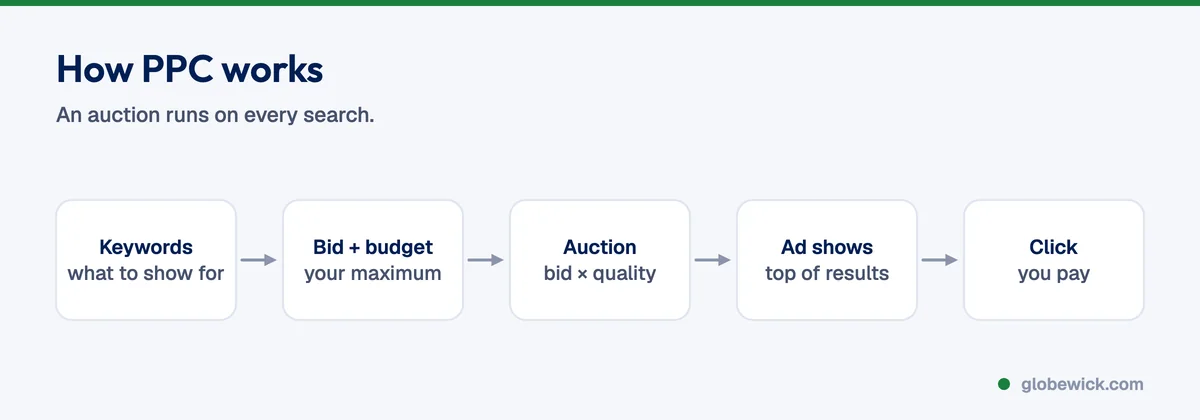
How pay-per-click advertising works
- You choose keywords or audiences: for search ads, the searches you want to appear for, such as "running shoes for women".
- You set a bid and budget: the most you will pay per click, and a daily budget.
- An auction runs on every search: the platform weighs your bid against the quality and relevance of your ad and landing page.
- Your ad shows: if you win a position, your ad appears above or below the organic results.
- You pay only when someone clicks, and the click usually costs less than your maximum bid.
Ad Rank and Quality Score
On Google Ads, the highest bid does not automatically win. Your position depends on Ad Rank, which combines your bid with ad quality, expected click-through rate, landing page experience and ad assets. A relevant ad with a strong landing page can beat a bigger bid and pay less per click. Quality Score (1 to 10 per keyword) is Google's diagnostic of that relevance.
Types of PPC ads
- Search ads: text ads on search results, triggered by keywords. Highest intent.
- Shopping ads: product image, price and store name, from your product feed.
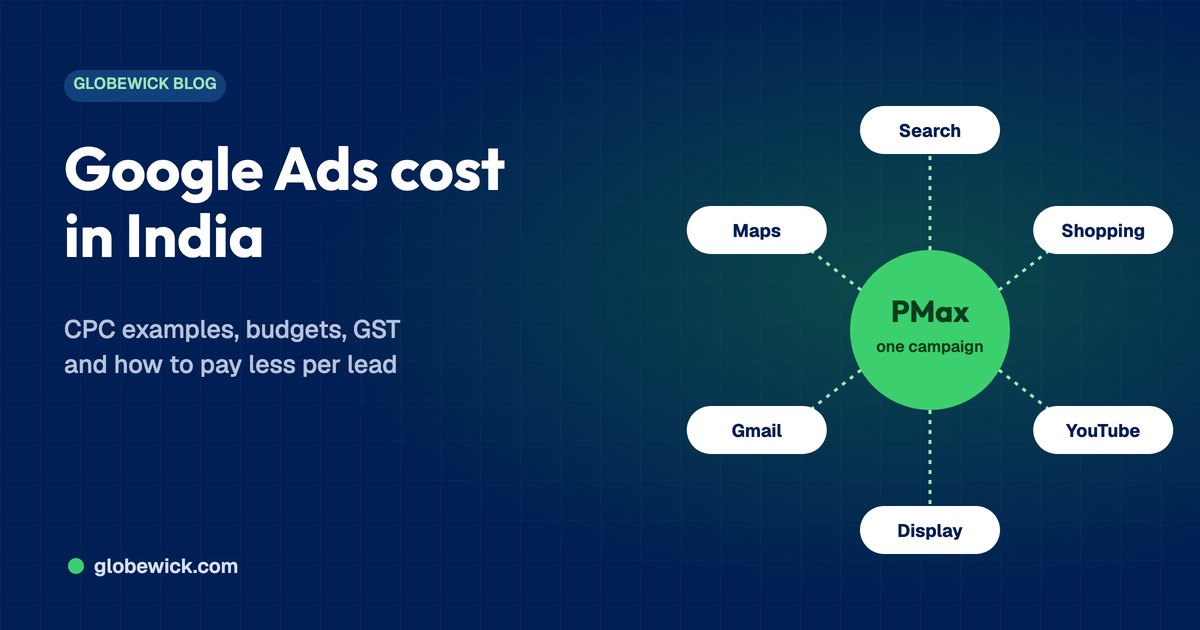
- Performance Max: Google's automated campaigns across Search, Shopping, YouTube, Display, Discover, Gmail and Maps. See what you can and cannot control in Performance Max.
- Display ads: banners on websites and apps, often used for remarketing.
- Video ads: YouTube ads, usually bought per view or per impression.
- Marketplace ads: Amazon Sponsored Products and similar. See our Amazon advertising guide.
- Social ads: Meta, LinkedIn and TikTok, bought per click, per thousand impressions or per result.
PPC vs SEO vs SEM
- PPC is paid: fast results, but traffic stops when you stop paying.
- SEO is earning organic rankings: slower, but the traffic keeps coming without paying per click. See what SEO is.
- SEM (search engine marketing) is usually used to mean paid search ads, and sometimes means paid search plus SEO together.
Most businesses do best with both: PPC for immediate demand and testing, SEO for long-term traffic.
PPC metrics that matter
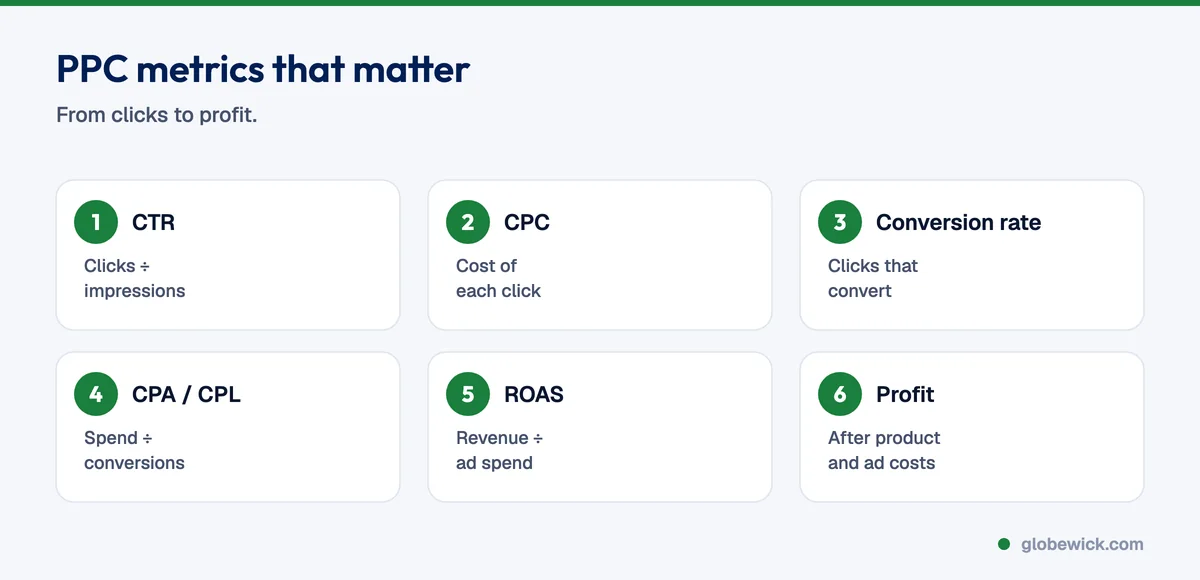
- CTR (click-through rate): clicks divided by impressions. Shows how relevant your ad is.
- CPC (cost per click): what each click costs. See Google Ads cost in India for real ranges.
- Conversion rate: the share of clicks that become leads or sales.
- CPA or cost per lead: spend divided by conversions. Set a target before launch with how to set a realistic CPA target.
- ROAS: revenue divided by ad spend. See what a good ROAS is.
How to start a PPC campaign
- Set up conversion tracking first, so you know which clicks become leads or sales.
- Start with high-intent keywords: searches that include a product, service, "near me", "price" or "buy".
- Add negative keywords to block irrelevant searches, such as "free", "jobs" or "course" if they do not fit.
- Write ads that match the search and send people to a landing page that matches the ad.
- Start with a budget you can sustain for at least two to four weeks of learning.
- Review search terms weekly and move budget to what converts.
Keyword research for PPC and SEO overlaps. See our keyword research guide.
Common PPC mistakes
- Running broad match without conversion tracking or negatives.
- Sending every ad to the homepage.
- Judging success by clicks instead of cost per lead or sale.
- Changing settings every day before the campaign has data.
- Leaving the default options for Display and Search Partners turned on without checking.
Should you hire a PPC agency or expert?
You can run small campaigns yourself. A specialist usually pays for themselves when spend grows, when you sell in several markets, or when cost per lead is rising. Look for someone who reports on leads and revenue, not just clicks. See our Google Ads and PPC management services. We manage paid campaigns for e-commerce brands in medical apparel, telehealth, fitness, activewear, supplements, beauty and fashion.
FAQ
Is PPC worth it for small businesses?
Yes, when the keywords show buying intent and the landing page converts. Start small, track conversions and grow what works.
How much does PPC cost?
You set the budget. The cost per click depends on competition in your industry and country, from a few rupees to hundreds of rupees per click in competitive niches.
Is Google Ads the same as PPC?
Google Ads is the biggest PPC platform. PPC is the wider model, which also includes Microsoft Advertising, Amazon Ads and cost-per-click social ads.