 GLOBEWICK
Amazon Marketing and Advertising: Listings, Sponsored Ads and ACoS
Amazon marketing is everything a seller or brand does to get found and chosen on Amazon: optimised product listings, reviews, A+ content, a Brand Store, and Amazon Ads such as Sponsored Products, Sponsored Brands and Sponsored Display. Because shoppers on Amazon are ready to buy, Amazon advertising is pay-per-click with very high purchase intent. Ads work best when the listing underneath is strong, because Amazon rewards products that convert with better visibility.
Google Ads Keyword Planner showed 100 to 1,000 searches a month for "amazon marketing" in both India and the United States in November 2026, plus hundreds of related searches about advertising on Amazon, Amazon PPC, ACoS and the Amazon Marketing Cloud.
Step 1: Get the listing right before you advertise
- Title: brand, product type, key feature, size or variant, written for both search and humans.
- Images: a clean main image plus lifestyle, size, feature and comparison images.
- Bullets and description: benefits first, answering the questions buyers ask.
- Backend search terms: relevant keywords and synonyms that do not fit in the visible copy.
- A+ content: for brand-registered sellers, richer images and comparison charts.
- Reviews and ratings: through good products, packaging and Amazon's legitimate review programmes. Never buy reviews.
- Price and delivery: competitive pricing and fast delivery options, such as FBA or Prime eligibility, affect conversion.
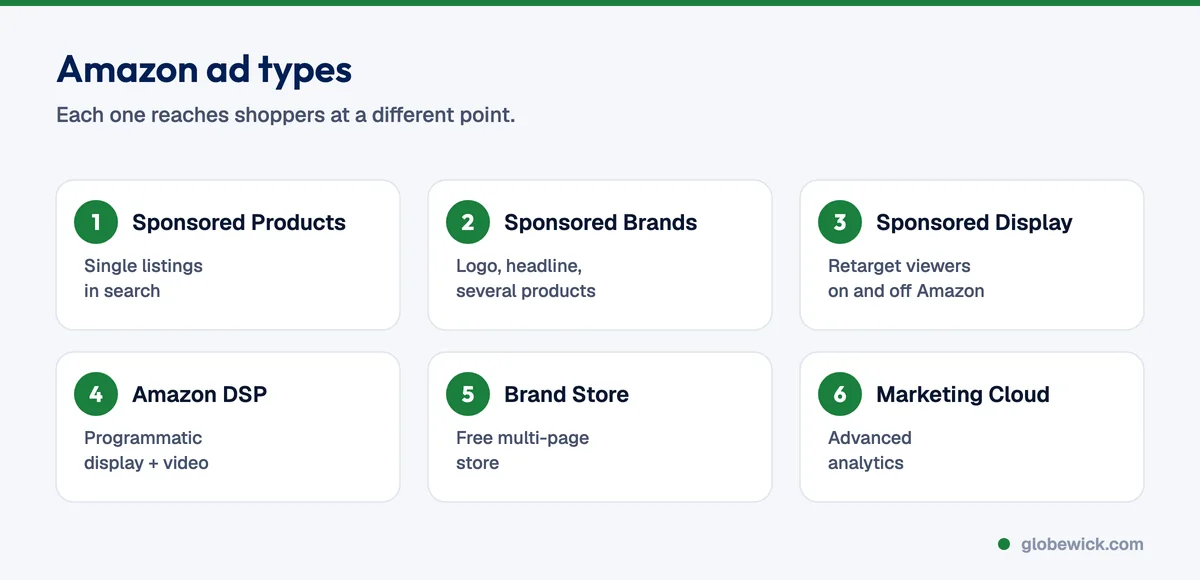
Step 2: Advertising on Amazon
- Sponsored Products: ads for individual listings in search results and on product pages. Pay per click. The starting point for most sellers.
- Sponsored Brands: your logo, a headline and several products, or a video, at the top of search. For brand-registered sellers.
- Sponsored Display: reach shoppers who viewed your products or similar products, on and off Amazon.
- Amazon DSP: programmatic display and video ads using Amazon's shopping data, usually for larger budgets.
- Amazon Marketing Cloud: a clean-room analytics tool for advanced advertisers to analyse ad and purchase journeys.
How to structure Amazon PPC campaigns
- Start with an automatic campaign to discover which searches convert.
- Run manual campaigns with exact and phrase match keywords for proven terms.
- Add product targeting to show on competitor and complementary product pages.
- Harvest and negate weekly: move converting search terms into manual campaigns and add wasted terms as negatives.
- Protect your brand terms so competitors do not take shoppers searching for you.
Amazon advertising metrics: ACoS, TACoS and ROAS
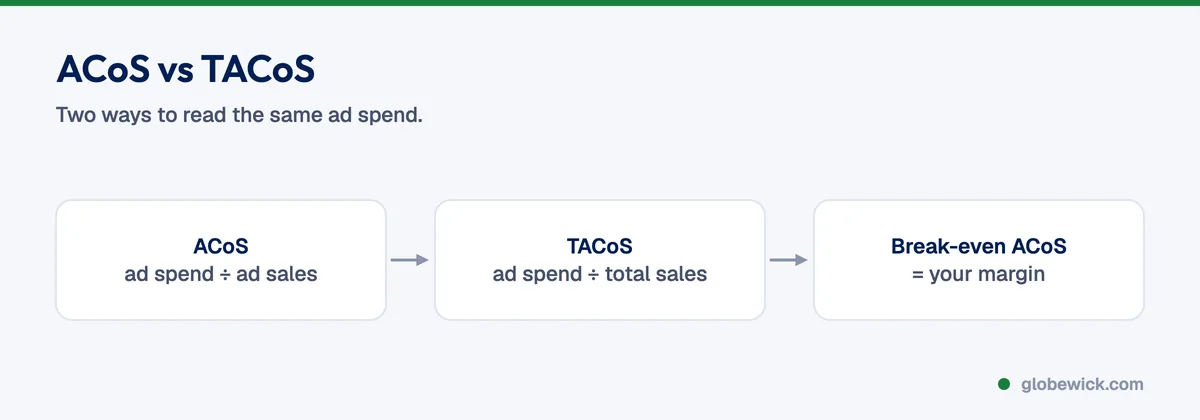
- ACoS (advertising cost of sales): ad spend divided by ad sales. An ACoS of 25% means you spent ₹25 for every ₹100 of ad sales.
- ROAS: ad sales divided by ad spend, the inverse of ACoS. 25% ACoS equals a ROAS of 4.
- TACoS (total ACoS): ad spend divided by total sales, including organic. If TACoS falls while sales grow, ads are lifting organic sales too.
- Break-even ACoS: your profit margin before ad costs. Above it, each ad sale loses money.
Amazon marketing beyond ads
- Brand Store: a free multi-page store for brand-registered sellers, useful as a landing page for your own ads and social traffic.
- Posts and Amazon Live: free and low-cost ways to show products in action, where available.
- Deals and coupons: Lightning Deals, coupons and event sales such as Prime Day and festive sales.
- External traffic: send Meta, Google and influencer traffic to your listing or Brand Store, and track it with Amazon Attribution.
Amazon vs your own Shopify store
Amazon brings ready buyers but takes fees and controls the customer relationship. Your own store keeps the customer data and margin but needs you to bring traffic. Many D2C brands use both. See what a D2C brand is and our Meta ads playbook for D2C brands.
Want help with Amazon or marketplace growth? See our e-commerce marketing services.
FAQ
What is a good ACoS on Amazon?
It depends on your margin. A good ACoS is below your break-even ACoS. Launch campaigns often run higher on purpose to build sales history.
How much should I spend on Amazon ads?
Start with a daily budget you can hold for a few weeks, then scale campaigns that are below your target ACoS.
Do Amazon ads help organic ranking?
Often yes. Ad sales add to sales velocity and conversion history, which can improve organic visibility for those searches.