 GLOBEWICK
Marketing Strategy: How to Build One Step by Step
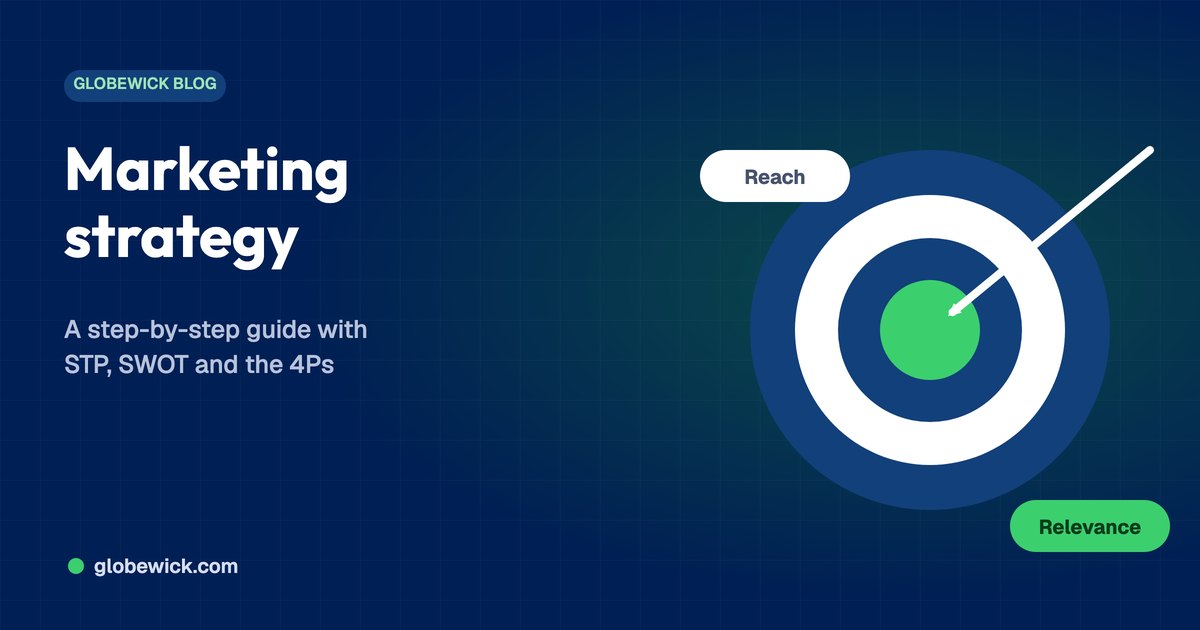
A marketing strategy is your plan for reaching the right customers with the right message and offer, through the right channels, at a cost that makes a profit. It answers five questions: who you are selling to, what makes you the better choice, which channels you will use, how much you will spend and how you will measure success. A marketing plan then turns the strategy into actions, dates, owners and budgets. This guide walks through building one step by step, with the classic frameworks explained in plain language.
"Marketing strategy" is searched 100,000 to 1 million times a month in the United States and 10,000 to 100,000 times a month in India, according to Google Ads Keyword Planner data we pulled in November 2026.
Marketing strategy vs marketing plan
- Strategy: the big choices. Who you target, how you position yourself and where you compete. It changes rarely.
- Plan: the execution. Campaigns, content, budgets, timelines and owners for the next quarter or year.
- Tactics: individual actions, such as a Reels series, a Google Ads campaign or an email sequence.
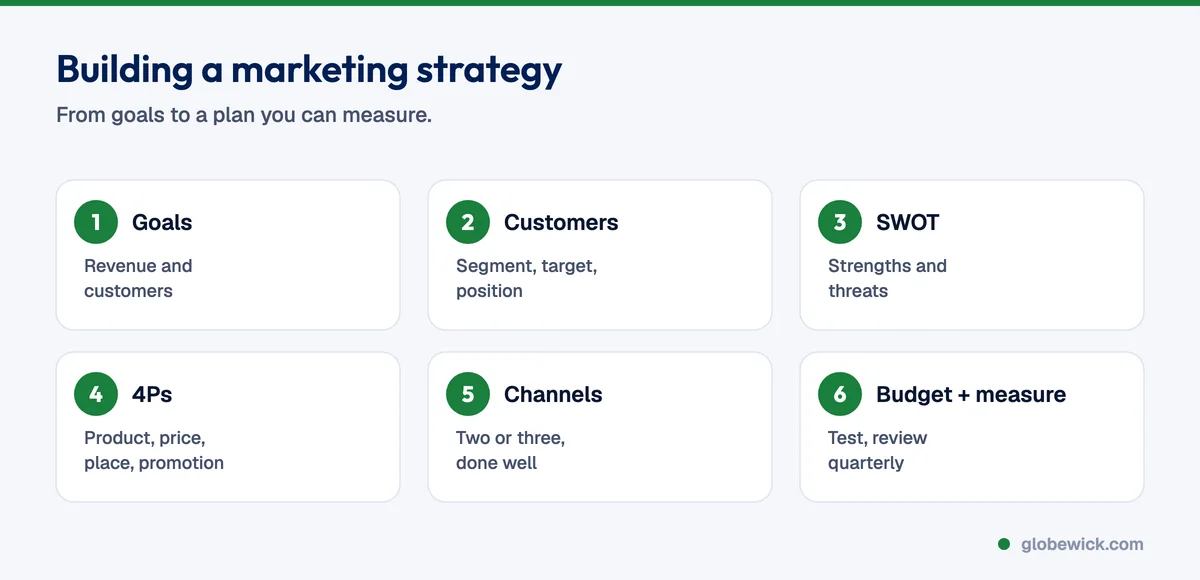
Step 1: Define your goals
Start from business goals, not marketing activity. "Grow revenue from ₹50 lakh to ₹80 lakh this year" or "add 40 new B2B clients" is a goal. "Post every day" is a tactic. Translate the goal into marketing numbers: how many leads or orders you need, at what cost per customer.
Step 2: Know your market and customers
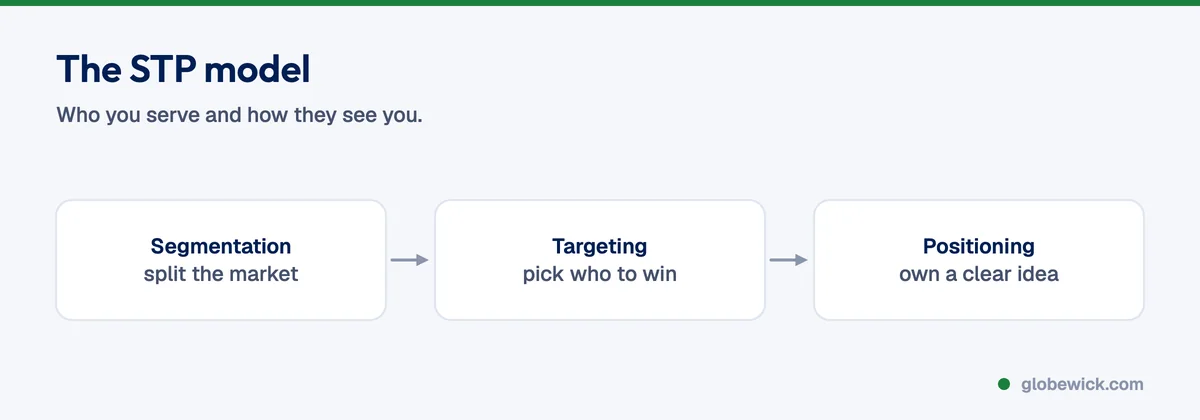
- Segmentation: split the market into groups with different needs, such as by industry, company size, age, location or buying behaviour.
- Targeting: choose the segments you can win and serve profitably.
- Positioning: decide how you want those customers to see you compared with the alternatives.
This is the classic STP model (segmentation, targeting, positioning). Talk to customers, read reviews of competitors and look at what people search to learn the words and problems that matter.
Step 3: Analyse your position
A SWOT analysis lists your strengths, weaknesses, opportunities and threats. Keep it honest and specific: "we reply to enquiries within 10 minutes" is a strength you can market, while "great quality" is not.
Step 4: Set your marketing mix
The 4Ps are still a useful checklist:
- Product: what you sell and what problem it solves.
- Price: how you price against competitors and value. Common pricing strategies include penetration pricing (low to win share), premium pricing and value-based pricing.
- Place: where customers buy, such as your website, marketplaces, stores or a sales team.
- Promotion: how you reach and persuade them.
Step 5: Choose your channels
Pick the channels where your target customers already look for solutions:
- Search (SEO and Google Ads) for people actively looking. See what SEO is.
- Social media and Meta ads for reaching people before they search. See our social media marketing guide.
- Content marketing to educate and build trust. See our content marketing guide.
- Email and WhatsApp to win repeat business. See our email marketing guide.
- Partnerships, referrals and events for high-trust introductions.
Two or three channels done well beat six done badly. For help choosing, read choosing the right marketing channel for your stage.
Step 6: Budget
Work backwards from the customers you need and what you can afford to pay for each one. Keep 10% to 20% of the budget for tests. If you have no history to go on, read building a marketing budget without historical data.
Step 7: Measure and adjust
Track leads or sales, cost per customer, revenue by channel and customer lifetime value every month. Review the strategy every quarter. See how to know if your marketing is actually working.
Marketing strategy examples
- D2C brand: targets urban women aged 25 to 40 who want clean skincare, positions on visible results in 14 days, and uses Instagram Reels, Meta ads, creator content and WhatsApp follow-ups.
- B2B software company: targets finance teams at mid-size firms, positions on saving month-end closing time, and uses SEO guides, LinkedIn ads and demo-focused Google Ads. See our lead generation guide.
- Local clinic: targets families within 5 km, positions on same-day appointments, and uses Google Business Profile, local SEO and reviews.
A one-page marketing plan template
- Goal (revenue, customers, cost per customer)
- Target customer and their main problem
- Positioning statement: for [customer] who [need], we are the [category] that [key benefit], unlike [alternative]
- Offer and pricing
- Channels, with a monthly budget for each
- 90-day actions with owners and dates
- Metrics and review dates
Want a strategy built around your numbers? See our services or talk to us.
FAQ
What are the 4 types of marketing strategy?
Common groupings include cost leadership, differentiation, focus (niche) and growth strategies such as market penetration or new market entry. Most businesses combine a positioning choice with a growth plan.
What is the difference between a marketing strategy and a sales strategy?
Marketing creates demand and attracts interested buyers. Sales converts that interest into customers. The two should share goals and data.
How often should a marketing strategy change?
The core strategy should hold for a year or more. Review the plan and tactics every quarter.