 GLOBEWICK
Content Marketing: Strategy, Types and Examples
Content marketing is creating and sharing genuinely useful content, such as articles, videos, guides, tools and social posts, that attracts the people you want as customers and builds enough trust that they choose you when they are ready to buy. Instead of interrupting people with ads, you answer their questions. Done well, it brings search traffic, social reach and leads that keep coming long after the content is published. The core of a content marketing strategy is simple: know your audience's questions, create the best answer, distribute it where they spend time and measure what turns into business.
"Content marketing" is searched 100,000 to 1 million times a month in the United States and 10,000 to 100,000 times a month in India, according to Google Ads Keyword Planner data we pulled in November 2026.
Why content marketing works
- It meets buyers early: most people research before they contact a business.
- It compounds: a guide that ranks on Google can bring visitors for years.
- It builds trust: showing your expertise is more convincing than claiming it.
- It feeds every other channel: one strong piece becomes social posts, emails, ads and sales material.
Types of content marketing
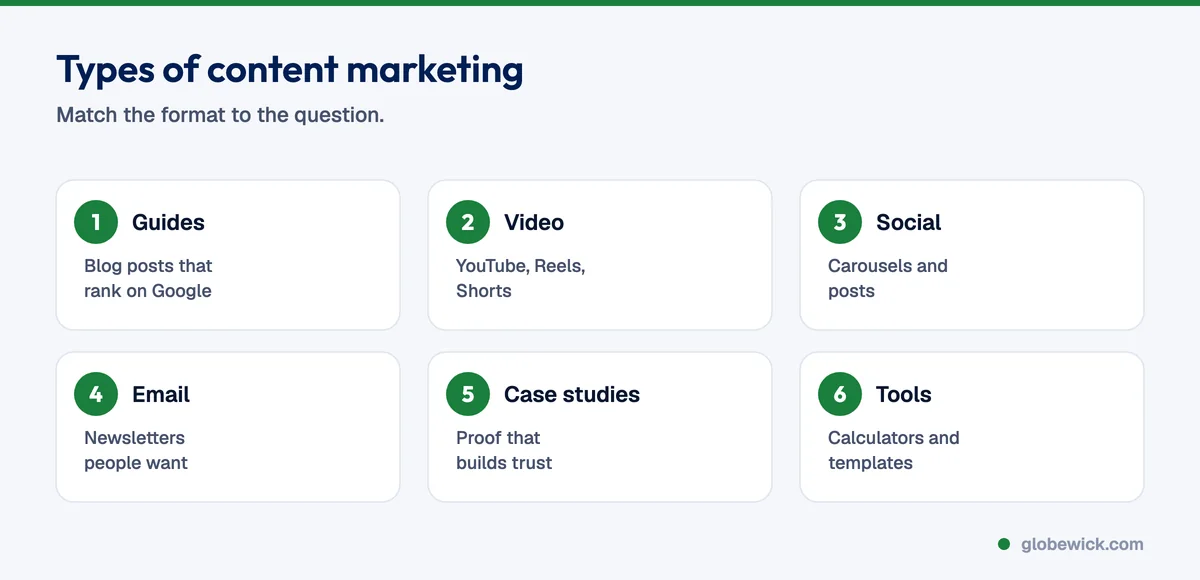
- Blog posts and guides: the backbone of SEO-driven content.
- Video: YouTube tutorials, Reels and Shorts.
- Social media content: carousels, threads and posts built for each platform.
- Email newsletters: regular value delivered to people who asked for it.
- Case studies: proof that turns interest into confidence.
- Tools and templates: calculators, checklists and templates that people save and share.
- Podcasts and webinars: deeper conversations for considered purchases.
Building a content marketing strategy
- Set the goal: organic traffic, leads, sales, sign-ups or brand awareness. Pick one main goal.
- Know the audience: their problems, questions and the words they use. Sales calls, reviews and support tickets are gold.
- Do keyword research: find what people search at each stage. See our keyword research guide.
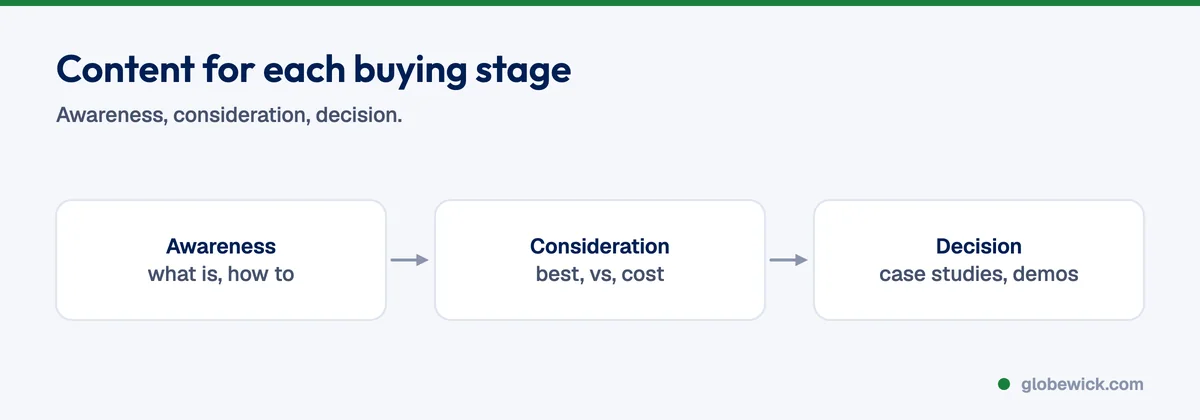
- Map content to the buyer journey: awareness (what is, how to), consideration (best, vs, cost) and decision (case studies, pricing, demos).
- Plan a calendar you can sustain. See building an SEO content calendar around buyer intent.
- Create the best answer: clearer, more specific and more useful than what ranks today, with real examples and data.
- Distribute: search, social, email, communities and paid promotion for your best pieces.
- Measure and update: refresh content that is slipping, and double down on what brings leads.
Content marketing and SEO
SEO tells you what people search. Content marketing creates the pages that answer those searches. Neither works well alone: SEO without content has nothing to rank, and content without SEO often reaches nobody. Give each topic one page and link related pages together. Read what SEO is and why internal linking matters.
Content marketing examples
- B2B software: a "how to close your books faster" guide series that ranks for finance searches and ends with a demo offer.
- D2C brand: a skincare brand's Reels explaining ingredients, plus a routine quiz that collects emails.
- Agency: cost guides and checklists that answer the questions clients ask before hiring, which is what this blog does.
How to measure content marketing
- Reach: organic clicks and impressions in Google Search Console, views and shares on social.
- Engagement: time on page, scroll depth, saves and replies.
- Conversion: newsletter sign-ups, leads, demo bookings and sales attributed to content.
- Efficiency: cost per piece versus leads and revenue generated.
Repurposing: get more from every piece
Turn one guide into a carousel, three short videos, an email and a LinkedIn post. See how to repurpose one piece of content into a week of posts. Keep a consistent voice across writers with a brand voice that survives multiple writers.
Common mistakes
- Writing about what you want to say rather than what customers ask.
- Publishing without distribution.
- Thin, generic content that adds nothing new.
- Several pages targeting the same search.
- Never updating content once it is published.
Need a team to plan and produce it? See our SEO and content services and social media content.
FAQ
What is the difference between content marketing and social media marketing?
Content marketing is the broader practice of creating useful content. Social media is one place to distribute it, alongside search, email and communities.
How long does content marketing take to work?
Social content can work in days. SEO-led content usually takes three to six months to rank and bring steady traffic.
How often should a business publish content?
Consistency matters more than volume. Two strong, well-researched articles a month beat eight thin ones.