 GLOBEWICK
How to Plan a Marketing Campaign (Steps, Examples, Template)
A marketing campaign is a planned set of marketing activities with one goal, one audience, one core message and a fixed time frame, such as a product launch, a festive sale or a lead generation push. Good campaigns are planned backwards from the goal: who you want to reach, what you want them to do, what will persuade them, which channels reach them, what it will cost and how you will measure success. This guide gives a step-by-step campaign plan, examples and a simple template.
"Marketing campaign" was searched 1,000 to 10,000 times a month in both India and the United States, according to Google Ads Keyword Planner data we pulled in November 2026.
How to plan a marketing campaign, step by step
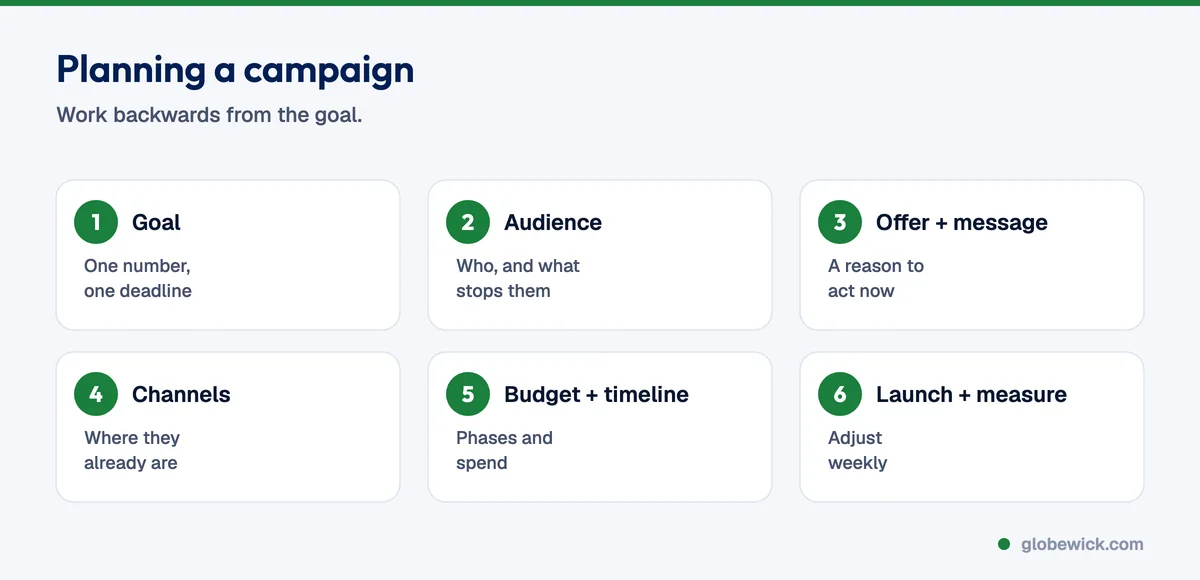
1. Set one clear goal
Make it specific and measurable: "200 orders of the new range in 30 days" or "60 qualified B2B leads this quarter". Work out the cost per result you can afford. See how to set a realistic CPA target.
2. Define the audience
Who exactly is the campaign for, what do they want, and what stops them buying today? See segmentation, targeting and positioning.
3. Craft the offer and message
One core message that connects the audience's problem to your solution, and an offer that gives a reason to act now, such as a launch price, bundle, free audit or limited edition.
4. Choose the channels
- Meta ads and Instagram for reach and visual products. See our Instagram marketing guide.
- Google Ads for people already searching. See what PPC is.
- Email and WhatsApp for your existing customers and leads.
- Creators for trust and content. See our influencer marketing guide.
- Organic social, PR and partners for extra reach.
5. Create the assets
Ads in several formats, a matching landing page, emails, social posts and creator briefs. Brief your team clearly. See how to brief a creative team.
6. Set the budget and timeline
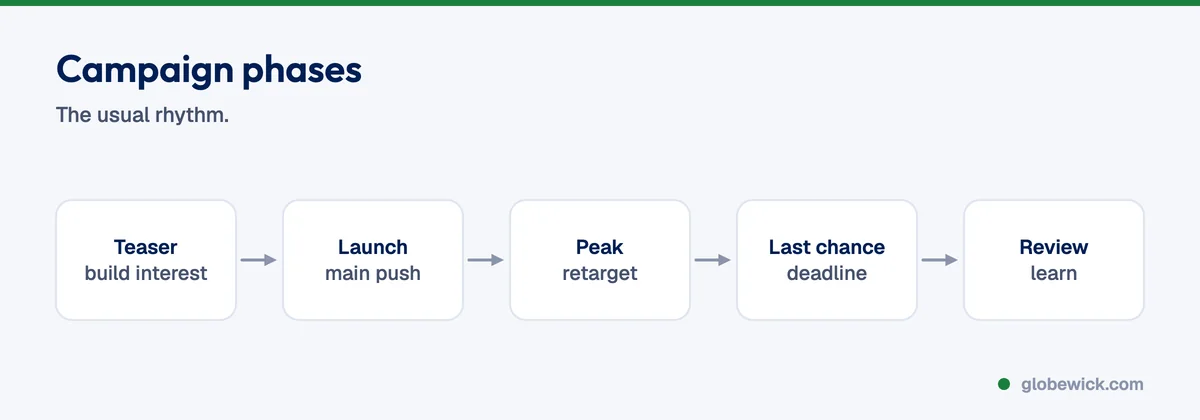
Plan teaser, launch, peak and last-chance phases. Keep part of the budget to scale what works.
7. Launch, measure and adjust
Check results daily in the first week, move budget to the best creatives and channels, and fix weak points quickly.
Types of marketing campaigns
- Product launch: build anticipation, then drive first sales.
- Seasonal or festive sale: Diwali, Black Friday, end of financial year.
- Lead generation: a lead magnet, webinar or free audit. See our lead generation guide.
- Brand awareness: video, creators and PR. See our brand marketing guide.
- Retention and win-back: bring past customers back.
- User-generated content and contests: get customers creating content for you.
Marketing campaign examples
- D2C festive gifting: a gift bundle with free gift wrap, promoted with creator Reels, Meta ads and WhatsApp reminders to past buyers, with a last-chance delivery date as the deadline.
- B2B webinar: a practical session for a target industry, promoted through LinkedIn, email and Google Ads, followed by a sales call offer for attendees.
- Local business opening: a launch offer promoted through Google Business Profile posts, local Instagram ads and partnerships with nearby businesses.
A one-page campaign template
- Campaign name and dates
- Goal and target cost per result
- Audience and their main problem
- Offer and core message
- Channels and budget for each
- Assets needed, owners and deadlines
- Tracking: UTM links, conversion events and the report
- Review date and what you will learn
How to measure a campaign
- Results against the goal: orders, leads or sign-ups.
- Cost per result and ROAS. See what a good ROAS is.
- Which channels, audiences and creatives performed best.
- New customers versus returning customers.
Write down what you learned so the next campaign starts smarter. For the bigger picture, read our marketing strategy guide. Want a campaign planned and run for you? See our services.
FAQ
How long should a marketing campaign run?
Most run from two to eight weeks. Always-on campaigns run continuously, with creative refreshed regularly.
What is the difference between a marketing campaign and a marketing strategy?
Strategy is the long-term plan for who you serve and how you win. A campaign is a time-bound push within that plan.
How much should I spend on a campaign?
Work backwards from the results you need and the cost per result you can afford, and keep some budget to scale what works.