 GLOBEWICK
Influencer Marketing: How to Find, Brief and Measure Creators
Influencer marketing is when a brand partners with creators who have a trusted audience on Instagram, YouTube or other platforms to promote its products or services. It works because people trust recommendations from creators they follow more than they trust ads. The best results come from matching the right creators to the right audience, giving them freedom to make content in their own style, and measuring sales, not only likes. This guide covers influencer types, how to find and brief creators, payment models, disclosure rules and measurement.
"Influencer" was searched 10,000 to 100,000 times a month in both India and the United States, and "influencer marketing" 1,000 to 10,000 times a month in each, according to Google Ads Keyword Planner data we pulled in November 2026.
Types of influencers by audience size
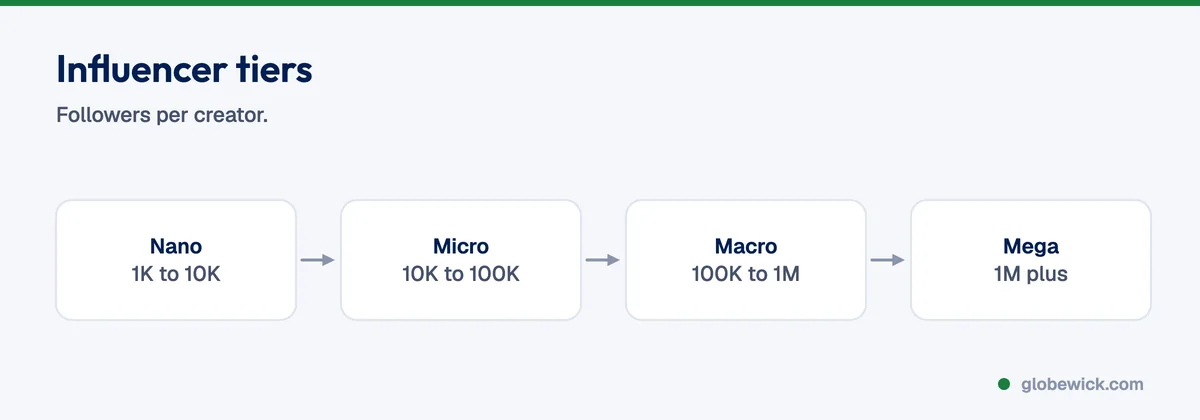
- Nano influencers (about 1,000 to 10,000 followers): close, engaged communities, affordable, often paid in product.
- Micro influencers (about 10,000 to 100,000): niche authority and strong engagement. Often the best value for D2C brands.
- Macro influencers (about 100,000 to 1 million): wider reach and more polished content, at higher cost.
- Mega influencers and celebrities (1 million plus): mass awareness, expensive and harder to measure.
What influencer marketing is good for
- Launches and awareness: getting a new product in front of the right audience quickly.
- Trust and social proof: real people using the product.
- Content for ads: creator videos often make the best-performing Meta ads, as whitelisted or partnership ads.
- Sales: with discount codes and tracked links.
How to run an influencer marketing campaign
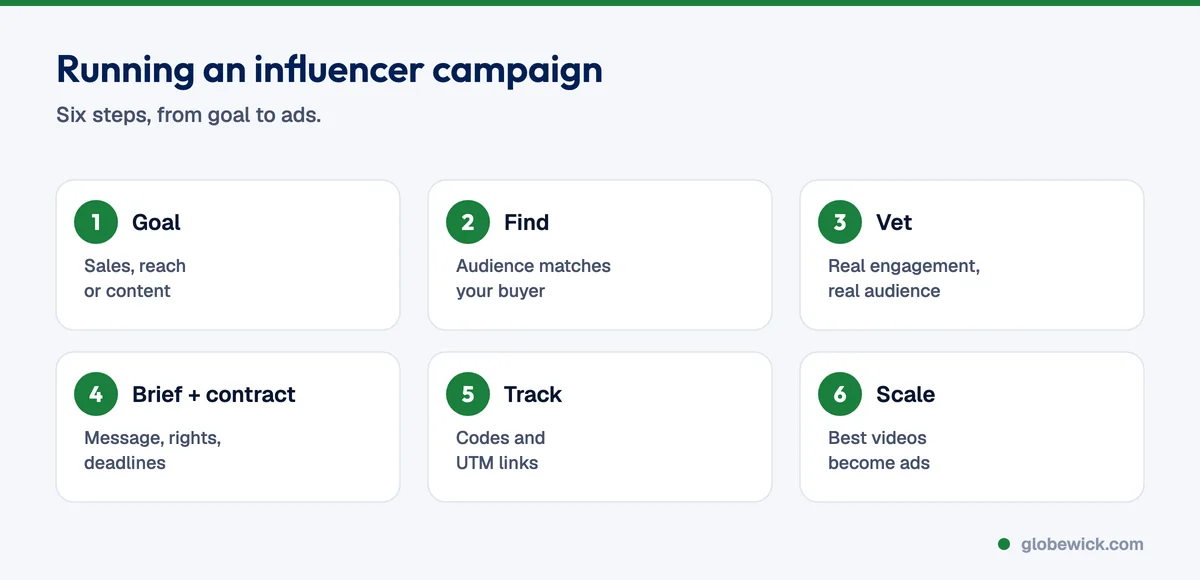
- Set one goal: sales, sign-ups, awareness or content for ads.
- Find creators whose audience matches your buyer: search hashtags and keywords, check who your customers already follow, or use discovery platforms.
- Vet them: check real engagement, comment quality, audience location and past brand work. Avoid accounts with sudden follower spikes.
- Brief clearly but loosely: the key message, must-say facts, what not to say, deadlines and usage rights. Let them create in their own style.
- Agree terms in writing: deliverables, payment, usage rights for ads, exclusivity and approval steps. Read what to ask before you sign a creator.
- Track everything: unique codes, UTM links and partnership ads.
- Turn winners into ads and build long-term relationships with the best creators.
How influencers are paid
- Product gifting: common with nano creators. No guarantee of a post.
- Fixed fee per deliverable: a Reel, a Story set or a YouTube integration.
- Commission or affiliate: a share of sales through their link or code. See our affiliate marketing guide.
- Hybrid: a lower fixed fee plus commission, which shares the risk.
- Usage rights: extra fees to run their content as ads for a set period.
Rates vary widely by niche, platform, audience size and usage rights, so compare several quotes.
Disclosure rules
Paid and gifted promotions must be clearly labelled. In India, the Advertising Standards Council of India (ASCI) guidelines require clear disclosure labels such as "Ad", "Collaboration" or "Sponsored". In the United States, the FTC requires clear disclosure of material connections. Use the platforms' paid partnership labels as well.
How to measure influencer marketing
- Reach and views from the creator's insights. Ask for screenshots.
- Engagement quality: saves, shares and genuine comments.
- Clicks and sales from codes and UTM links.
- Cost per acquisition compared with your paid ads.
- Ad performance of creator content when used in Meta ads.
For sales that do not use a code, compare total sales before and after, and ask new customers where they heard of you.
Influencer marketing for D2C brands
For online stores, the strongest approach is usually many micro creators rather than one big name, with the best videos then run as ads. We use this approach for e-commerce brands in activewear, beauty, supplements, fitness and fashion. See our Meta ads management and e-commerce marketing services.
FAQ
Is influencer marketing worth it?
It is when the creator's audience matches your buyer and you track results. It works best combined with ads and a strong product page.
How do I find influencers for my brand?
Search hashtags and keywords in your niche, look at who your customers follow and who your competitors work with, or use influencer discovery tools.
What is the difference between influencer and affiliate marketing?
Influencer marketing pays creators for content and reach. Affiliate marketing pays partners per sale or lead. Many deals combine both.