 GLOBEWICK
Segmentation, Targeting and Positioning (STP) Explained
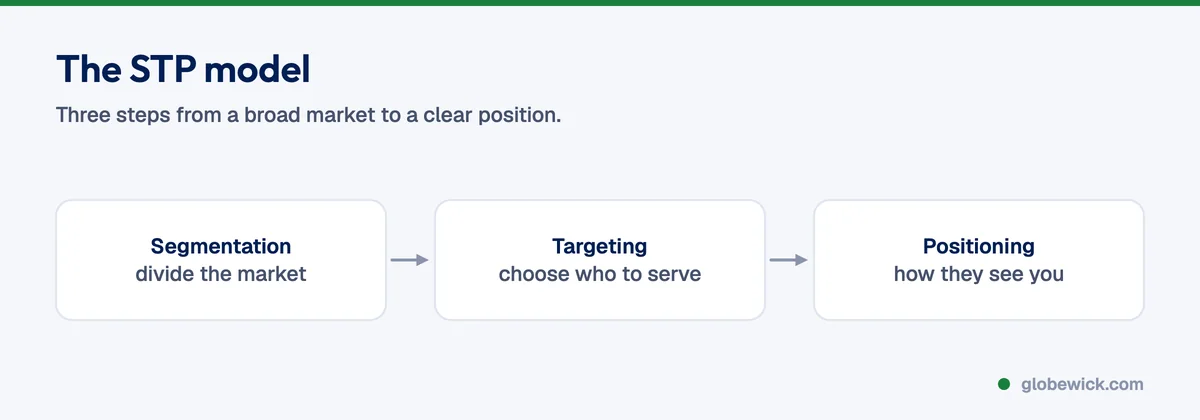
Segmentation, targeting and positioning (STP) is a three-step marketing model: split the market into groups of customers with similar needs (segmentation), choose the groups you can serve best and most profitably (targeting), then decide how you want those customers to see you compared with alternatives (positioning). STP stops you from marketing to "everyone", which usually means reaching no one well. This guide explains each step, the types of market segmentation, with examples and a simple process you can use.
"Segmentation targeting and positioning" was searched 100,000 to 1 million times a month in the United States and 10,000 to 100,000 times in India, and "market segmentation" 10,000 to 100,000 times a month in the US, according to Google Ads Keyword Planner data we pulled in November 2026.
Step 1: Market segmentation
Market segmentation is dividing a broad market into smaller groups of customers who share needs, characteristics or behaviour, so you can market to each group more effectively.
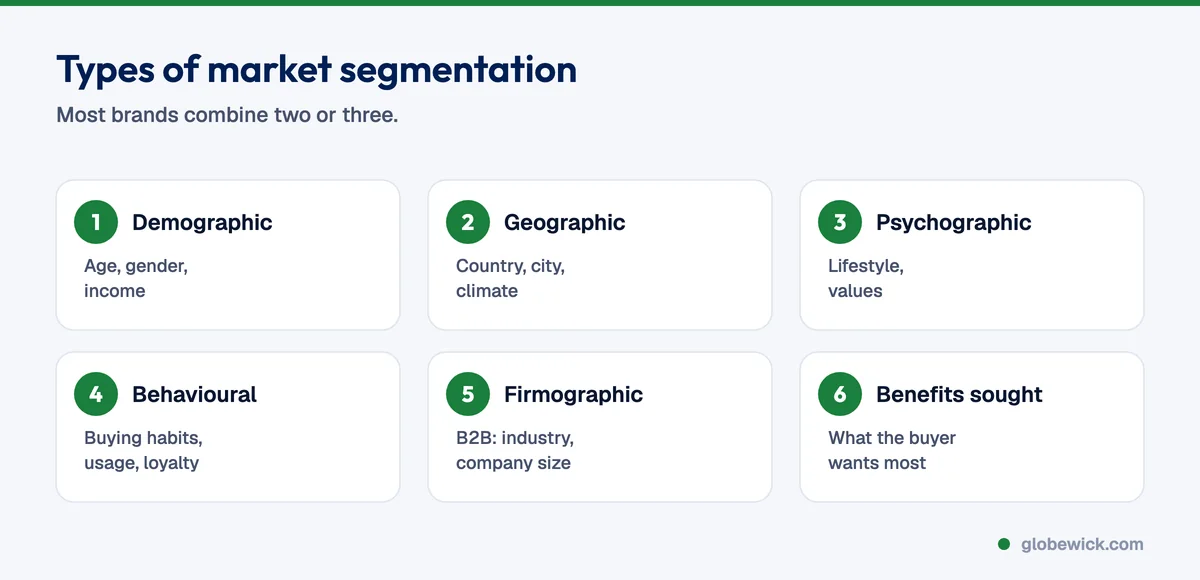
The four main types of market segmentation
- Demographic segmentation: age, gender, income, education, occupation, family size. Example: a skincare brand with separate ranges for teenagers and for women over 40.
- Geographic segmentation: country, region, city, climate, urban or rural. Example: a clothing brand selling warmer ranges in northern states in winter.
- Psychographic segmentation: lifestyle, values, interests and personality. Example: a fitness brand targeting people who value outdoor adventure rather than gym culture.
- Behavioural segmentation: how people buy and use products, such as purchase frequency, loyalty, usage rate, occasion and benefits sought. Example: a coffee brand rewarding daily buyers differently from gift buyers.
B2B markets use firmographic segmentation instead: industry, company size, revenue, location and buying process.
What makes a good segment
- Measurable: you can estimate its size and buying power.
- Substantial: big enough to be worth serving.
- Accessible: you can reach it through channels you can use.
- Different: it responds differently from other segments.
- Actionable: you can build an offer and message for it.
Step 2: Targeting
Targeting is choosing which segments to focus on. Compare each segment's size, growth, competition, profit and fit with your strengths. Common targeting strategies:
- Undifferentiated (mass) marketing: one offer for the whole market. Rare today outside basic commodities.
- Differentiated marketing: separate offers and messages for several segments.
- Concentrated (niche) marketing: focus on one segment and serve it better than anyone. Often the best choice for small businesses.
- Micromarketing: tailoring to very small groups, such as local or personalised marketing.
In digital marketing, targeting turns into real settings: keywords in Google Ads, audiences and creative in Meta ads, and the topics you choose for SEO content.
Step 3: Positioning
Positioning is the place you want to hold in your target customer's mind. It answers: why should this customer choose you over the alternatives?
- Pick a basis: price, quality, speed, expertise in a niche, a specific benefit or a value.
- Write a positioning statement: for [target customer] who [need], [brand] is the [category] that [key benefit], unlike [alternative], because [proof].
- Prove it everywhere: website, ads, packaging, sales calls and customer service.
A perceptual map helps: plot competitors on two things customers care about, such as price and quality, and look for an open space you can own. To test whether your positioning is landing, read how to know if your brand positioning actually works.
STP examples
- Premium sportswear brands segment by sport and lifestyle, target serious and aspiring athletes, and position on performance and inspiration.
- Coffee chains often target urban professionals and students, and position on experience and a "third place" between home and work rather than on price.
- A D2C skincare brand might segment by skin concern, target women aged 25 to 40 with sensitive skin, and position on gentle, clinically tested formulas.
- A B2B software company might segment by company size, target finance teams at mid-size firms, and position on cutting month-end closing time.
How to do STP for your business in one afternoon
- List your current best customers and what they have in common.
- Write down three to five possible segments using the types above.
- Score each on size, profit, competition and your fit.
- Pick one main target segment and, at most, one secondary segment.
- Write your positioning statement for the main segment.
- Check your website, ads and content: do they speak to that segment?
STP is step two of a full plan. See our marketing strategy guide for the rest, and how to choose the right channels.
FAQ
Why is market segmentation important?
It helps you spend money on the customers most likely to buy, write messages that feel relevant, and design products people actually want.
What is the difference between targeting and positioning?
Targeting is choosing who to serve. Positioning is deciding how you want those people to see you compared with competitors.
How many segments should a small business target?
Usually one, or two at most. Focus lets a small business beat bigger competitors in a niche.