 GLOBEWICK
Brand Marketing and Brand Strategy: A Practical Guide
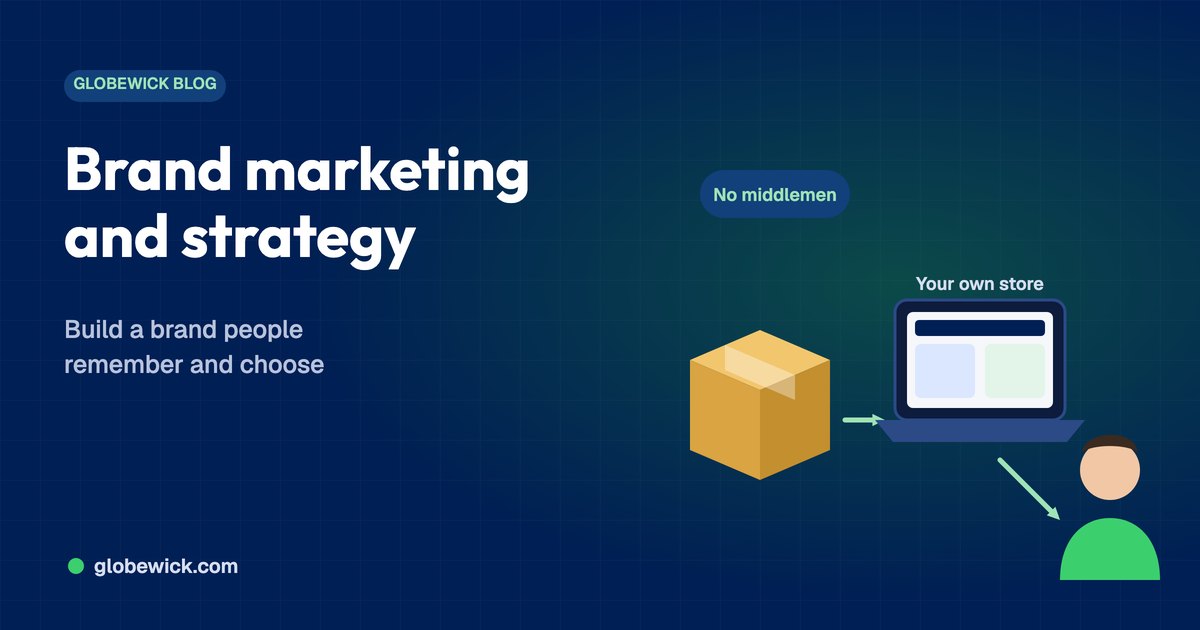
Brand marketing is building how people recognise, remember and feel about your business, so they choose you without needing a discount, while performance marketing drives immediate sales. A brand strategy defines who you are for, what you stand for, how you are different and how you sound and look. Brand marketing then makes that consistent everywhere: website, social media, ads, packaging, customer service and the way your team talks. Strong brands make every other channel cheaper, because people already know and trust you.
"Brand marketing" and "brand strategy" were each searched 1,000 to 10,000 times a month in both India and the United States, according to Google Ads Keyword Planner data we pulled in November 2026.
Brand marketing vs performance marketing
- Brand marketing: builds memory and preference over months and years. Measured by brand searches, direct traffic, recall and pricing power.
- Performance marketing: drives a measurable action now. Measured by cost per lead, ROAS and sales. See what performance marketing is.
They work best together: brand makes ads convert better, and ads put the brand in front of more people.
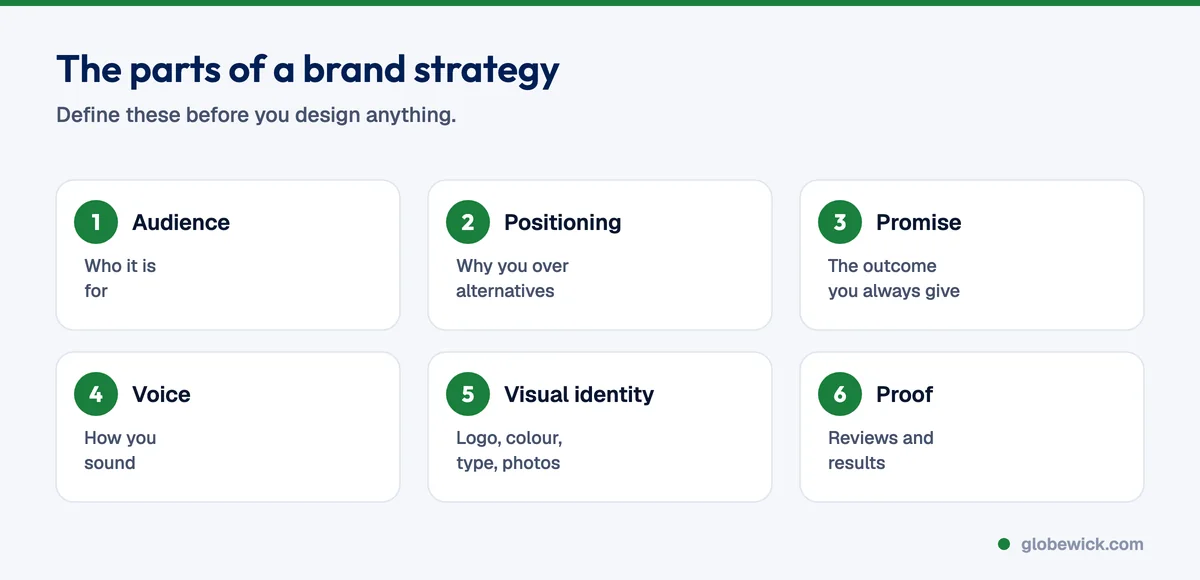
The parts of a brand strategy
- Audience: who the brand is for, specifically.
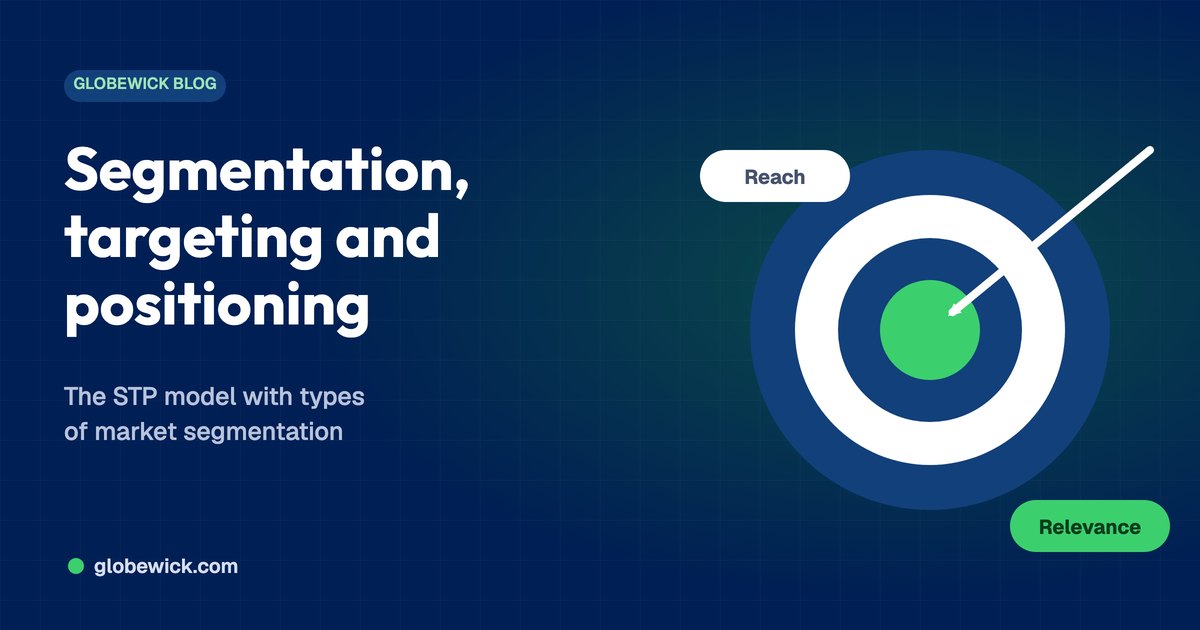
- Positioning: why you are the better choice for them, compared with alternatives. See segmentation, targeting and positioning.
- Brand promise: the one outcome customers can always expect.
- Personality and voice: how you sound in writing and video. See a brand voice that survives multiple writers.
- Visual identity: logo, colours, typography, photography style and packaging.
- Proof: reviews, results, certifications and stories that back up the promise.
Online branding: where people meet your brand
- Website: the clearest expression of who you are and what you offer.
- Google: your Business Profile, reviews and what appears when people search your name.
- Social media: a consistent look and voice across Instagram, LinkedIn and YouTube. See our social media marketing guide.
- Ads: recognisable creative that builds memory, not only offers.
- Packaging and delivery: for product brands, the unboxing is brand marketing.
- Customer service: how you answer messages and solve problems shapes the brand more than any ad.
Brand marketing tactics that work
- Founder-led content: a real face and point of view people can follow.
- Distinctive brand assets: a colour, sound, character or phrase used consistently so people recognise you instantly.
- Content that teaches: guides and videos that make you the expert in your niche. See our content marketing guide.
- Creator partnerships: borrowed trust from voices your audience follows. See our influencer marketing guide.
- Community: groups, events and customer spotlights. See community management.
- PR and partnerships: coverage and collaborations that put you next to trusted names.
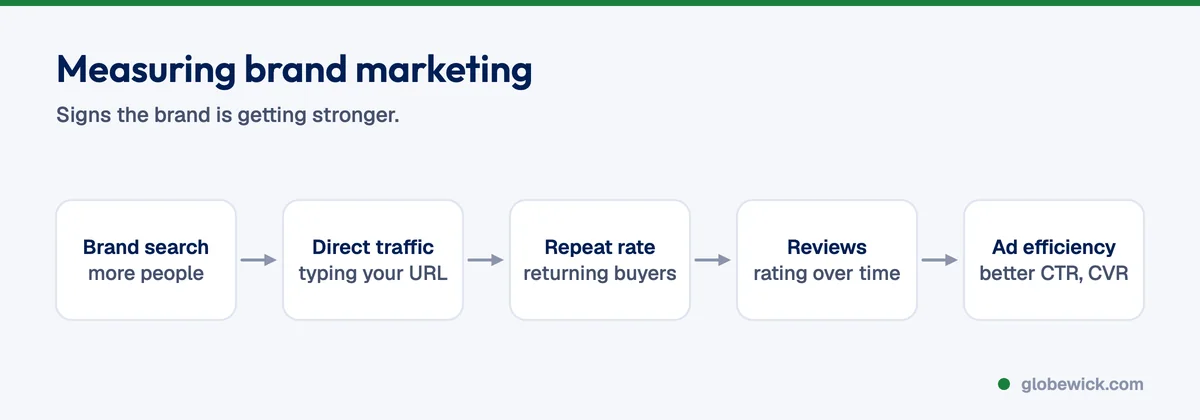
How to measure brand marketing
- Branded searches: more people searching your name in Google Search Console and Google Trends.
- Direct and returning traffic to your website.
- Repeat purchase rate and referrals.
- Reviews and ratings over time.
- Ad efficiency: better click-through and conversion rates as the brand becomes familiar.
To check whether your positioning is landing, read how to know if your brand positioning actually works.
Brand strategy for small businesses and D2C brands
A small business does not need a big budget to build a brand. It needs to be consistent and specific: one audience, one promise, one look and voice, repeated everywhere for a long time. For D2C brands, the product page, packaging and post-purchase messages are as important as ads. See what a D2C brand is.
We help D2C brands in beauty, activewear, supplements, fitness and fashion turn their positioning into content and ads that sell. See our services.
FAQ
What is the difference between branding and marketing?
Branding defines who you are and how you are seen. Marketing is the activity that spreads that message and drives sales.
How long does brand building take?
Months to years. Consistency over time is what builds memory and trust.
Is brand marketing worth it for a small business?
Yes, at the right scale. A clear, consistent brand makes ads, SEO and referrals work better, even without big brand campaigns.