 GLOBEWICK
Ecommerce SEO in Australia: A Practical Guide for Online Stores
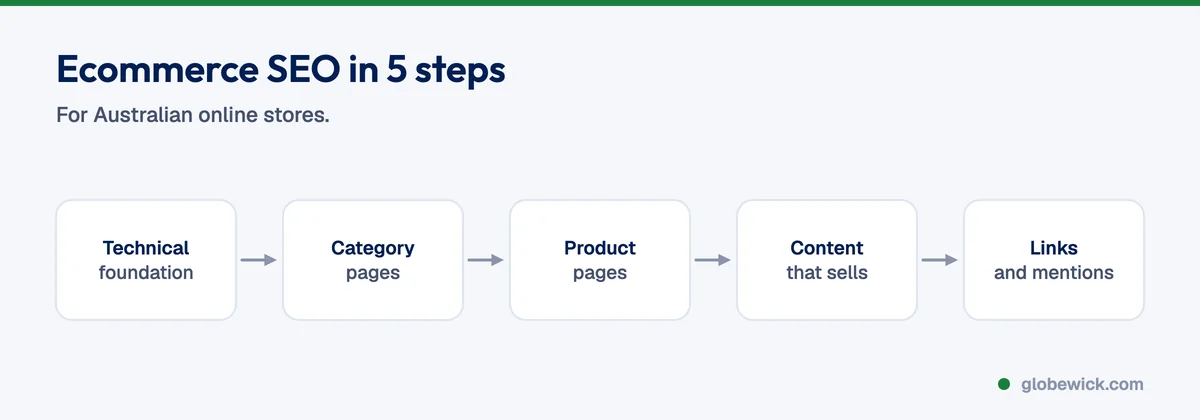
Ecommerce SEO in Australia means getting your category and product pages to rank in Google when Australians search for what you sell, such as "linen sheets australia", "kids sneakers" or "protein powder". The work falls into five areas: technical health, category pages, product pages, content that answers pre-purchase questions, and links. Done well, it brings buyers at no cost per click, which matters when Google Shopping and Meta costs keep rising. This guide covers each step for Australian online stores, including Shopify.
Why ecommerce SEO matters for Australian stores
Australian shoppers compare heavily before buying, and many start on Google. Paid channels work, but every sale costs money again. Organic rankings keep sending traffic without a click fee, which lowers your blended cost per order over time. When we checked Google Ads Keyword Planner for Australia in November 2026, searches such as "ecommerce seo", "ecommerce seo agency" and "shopify seo" each sat in the 100 to 1,000 searches a month band, a sign that Australian store owners are actively looking for this.
Step 1: Fix the technical foundation
- Indexing: check Google Search Console for pages that are excluded, duplicated or blocked.
- Duplicate URLs: filters, sorting and product variants can create thousands of near-identical pages. Use canonical tags and keep filtered URLs out of the index unless they target real searches.
- Site speed: compress images, remove unused apps and scripts, and check Core Web Vitals on mobile.
- Structured data: add Product schema with price in AUD, availability and reviews so listings can show rich results.
- Out of stock and discontinued products: keep temporarily out-of-stock pages live, and redirect discontinued products to the closest alternative.
Step 2: Turn category pages into ranking pages
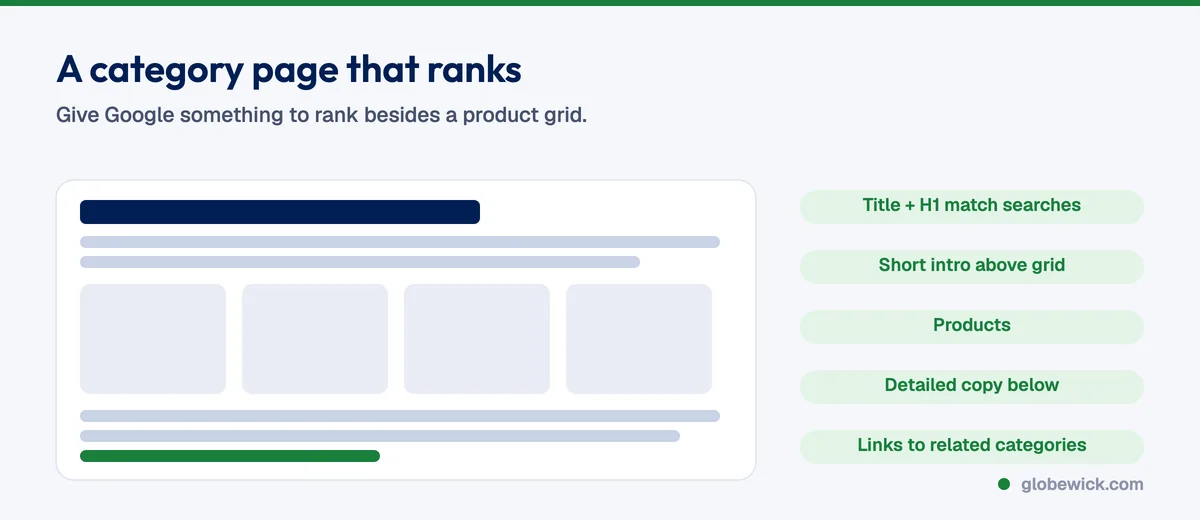
Category (or collection) pages target the biggest buyer searches, but many stores leave them as a grid of products with no text. Give each important category:
- A clear title and H1 matched to how Australians search, for example "Women's Linen Pants" rather than "The Summer Edit".
- A short introduction above the products and a more detailed section below, covering materials, sizing, uses and delivery in Australia.
- Internal links to related categories and buying guides.
- Sub-categories for important variations, such as "linen pants petite" or "wide leg linen pants", if people search for them.
Step 3: Write product pages for buyers and Google
- Unique product descriptions, not the manufacturer's copy used by every other retailer.
- Titles that include the product type and key attributes, such as colour, size or material.
- Descriptive image file names and alt text.
- Answers to the questions customers ask before buying: sizing, care, shipping times across Australia, returns and buy now, pay later options.
- Customer reviews on the page, marked up with review schema.
Step 4: Publish content that sells
Blog posts and buying guides capture searches from people who are not ready to buy yet, then link them to the right products. Good topics answer real questions: "how to choose a mattress", "best running shoes for flat feet", "how to care for linen". Use Australian spelling, seasons and prices. Christmas falls in summer here, and end of financial year sales matter in June.
Step 5: Earn links and mentions
Links from relevant Australian sites still help stores rank. Good sources include gift guides, product reviews from Australian bloggers and publications, collaborations with complementary brands, supplier and stockist pages, and digital PR around genuinely interesting data or stories. Avoid paid link packages.
Shopify SEO tips for Australian stores
- Use your primary domain on .com.au if you sell mainly in Australia, and set Australia as the main market.
- Watch for duplicate product URLs created by collection paths, and link to the canonical product URL in your theme.
- Edit the title tag and meta description for every collection and key product in Shopify's search engine listing settings.
- Keep apps lean, because each one can add scripts that slow the store down.
Our Shopify SEO checklist goes through each setting.
How to measure ecommerce SEO
Track organic sessions, rankings for your main categories and, most importantly, organic revenue in GA4 or your store analytics. A store doing SEO well should see organic revenue grow month on month, not just traffic.
How long does ecommerce SEO take?
Technical fixes and category improvements can show movement within two to three months. Competitive categories in Australia usually take six months or more. If you want help, see our ecommerce SEO services or our page for Australian businesses.
FAQ
How much does ecommerce SEO cost in Australia?
Most Australian agencies charge around A$1,500 to A$4,000 a month ex GST for an ecommerce SEO retainer, more for large catalogues. See how much SEO costs in Australia.
Is Shopify good for SEO?
Yes. Shopify handles the basics well. Most problems come from duplicate URLs, thin collection pages, slow apps and missing schema, which can all be fixed.
Should I focus on SEO or Google Shopping?
Most stores benefit from both. Shopping ads bring sales now, and SEO lowers your cost per order over time.