 GLOBEWICK
Marketing Automation: What to Automate First and Which Tools to Use
Marketing automation is using software to send the right message to the right person at the right moment automatically, based on what they do, such as signing up, browsing a product, abandoning a cart, booking a call or going quiet. It covers automated email, WhatsApp and SMS flows, lead scoring, lead routing to sales, ad audiences and reporting. Done well, it saves hours of manual work and lifts revenue, because every lead and customer gets timely follow-up without anyone remembering to send it.
"Marketing automation" was searched 1,000 to 10,000 times a month in both India and the United States, according to Google Ads Keyword Planner data we pulled in November 2026.
What you can automate
- Welcome series for new subscribers and leads.
- Abandoned cart and browse reminders for online stores.
- Post-purchase messages: order updates, how-to-use tips, review requests and cross-sells.
- Lead nurture sequences that educate B2B leads until they are ready for a call.
- Lead scoring and routing: score leads by fit and activity, and send hot leads to sales instantly.
- Re-engagement and win-back for inactive customers.
- Appointment reminders and follow-ups.
- Ad audiences: sync customer lists and segments to Meta and Google automatically.
- Reports delivered on a schedule.
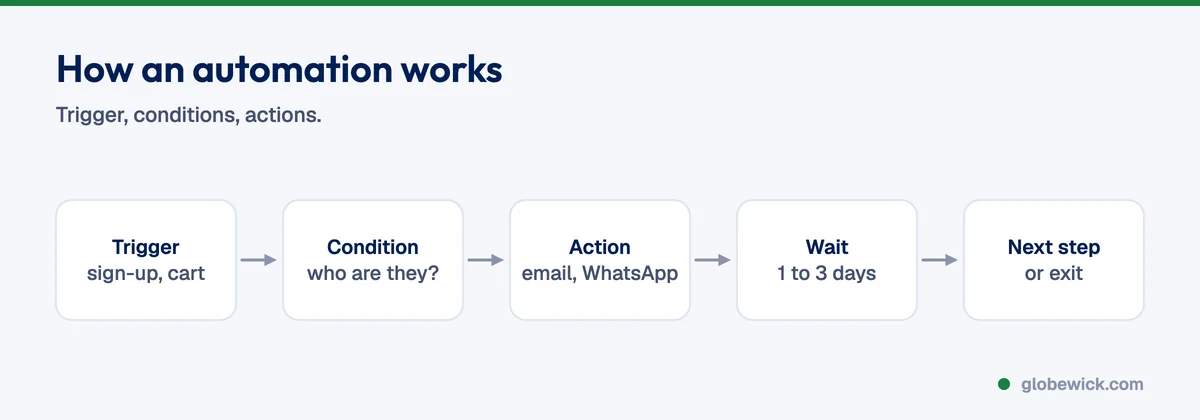
How marketing automation works
Every automation has the same parts:
- Trigger: the event that starts it, such as a form fill, purchase or page visit.
- Conditions: rules that decide the path, such as "has bought before" or "is in Mumbai".
- Actions: what happens, such as sending an email or WhatsApp message, adding a tag, notifying sales or updating the CRM.
- Waits: delays between steps, such as one day or three days.
- Exit: when the person converts or meets a goal, they leave the flow.
Marketing automation tools
- E-commerce: Klaviyo, Omnisend and Shopify Flow.
- B2B and CRM-led: HubSpot, ActiveCampaign, Zoho and Salesforce Marketing Cloud.
- WhatsApp: WhatsApp Business Platform providers such as Interakt, WATI and AiSensy, popular in India.
- Connectors: Zapier, Make and n8n link tools that do not integrate directly.
Compare email tools in our guide to the best email marketing platforms.
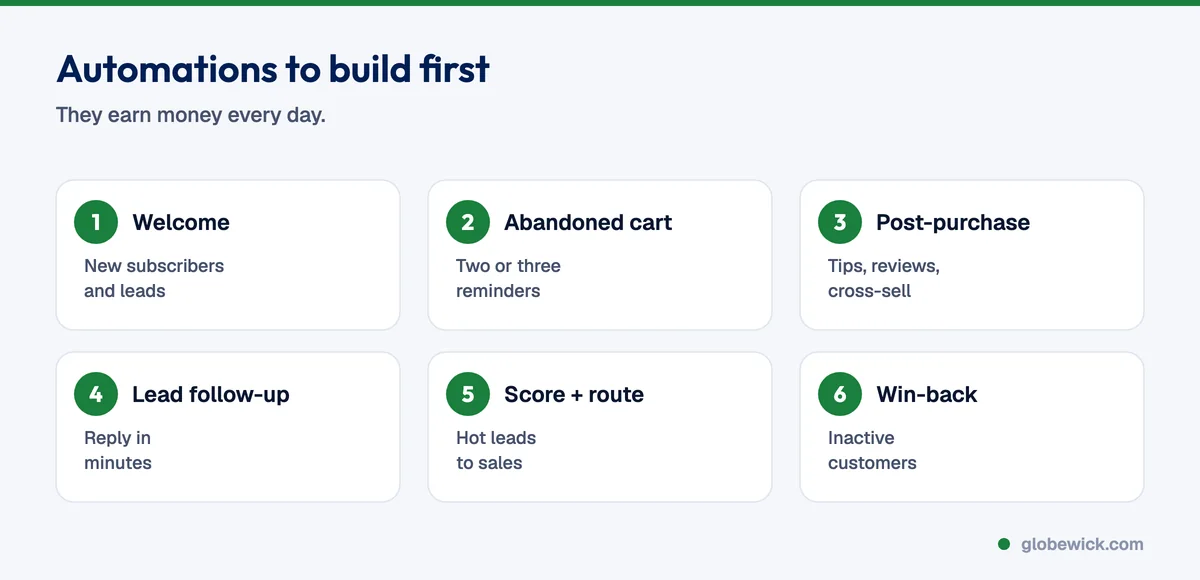
The first automations to build
For online stores
- Welcome series with a first-order offer.
- Abandoned cart, with two or three reminders.
- Post-purchase thank you, how-to-use tips and a review request.
- Win-back for customers who have not ordered in a while.
Details: the email and SMS flows every D2C store should have live.
For lead generation businesses
- Instant reply and sales alert when a lead comes in.
- Follow-up sequence by email and WhatsApp. See how long a follow-up sequence should be.
- Lead scoring and routing to the right salesperson. See lead routing.
- Nurture content for leads who are not ready yet.
Best practices
- Start with three flows and make them good before adding more.
- Write like a person: automated does not have to sound automated. See WhatsApp sequences that do not feel like spam.
- Respect permission: only message people who opted in, and make opting out easy.
- Keep data clean: automation is only as good as the data it runs on.
- Review monthly: check revenue per flow, conversion rates and unsubscribes.
How to measure marketing automation
- Revenue or leads generated per flow.
- Conversion rate at each step.
- Speed to lead: how fast new leads get a reply.
- Time saved for the team.
- Unsubscribe and complaint rates.
Want automations set up for you? See our e-commerce marketing and B2B lead generation services. For the basics of the main channel, read our email marketing guide.
FAQ
Is marketing automation only for big companies?
No. Small businesses often gain the most, because automation replaces follow-up work nobody has time for. Many tools have free or low-cost plans.
What is the difference between marketing automation and a CRM?
A CRM stores contacts and deals and manages sales. Marketing automation sends messages and runs workflows. Many platforms now do both.
Will automation make my marketing feel robotic?
Only if the messages are generic. Personalised, well-timed messages written in a human voice usually feel more helpful, not less.